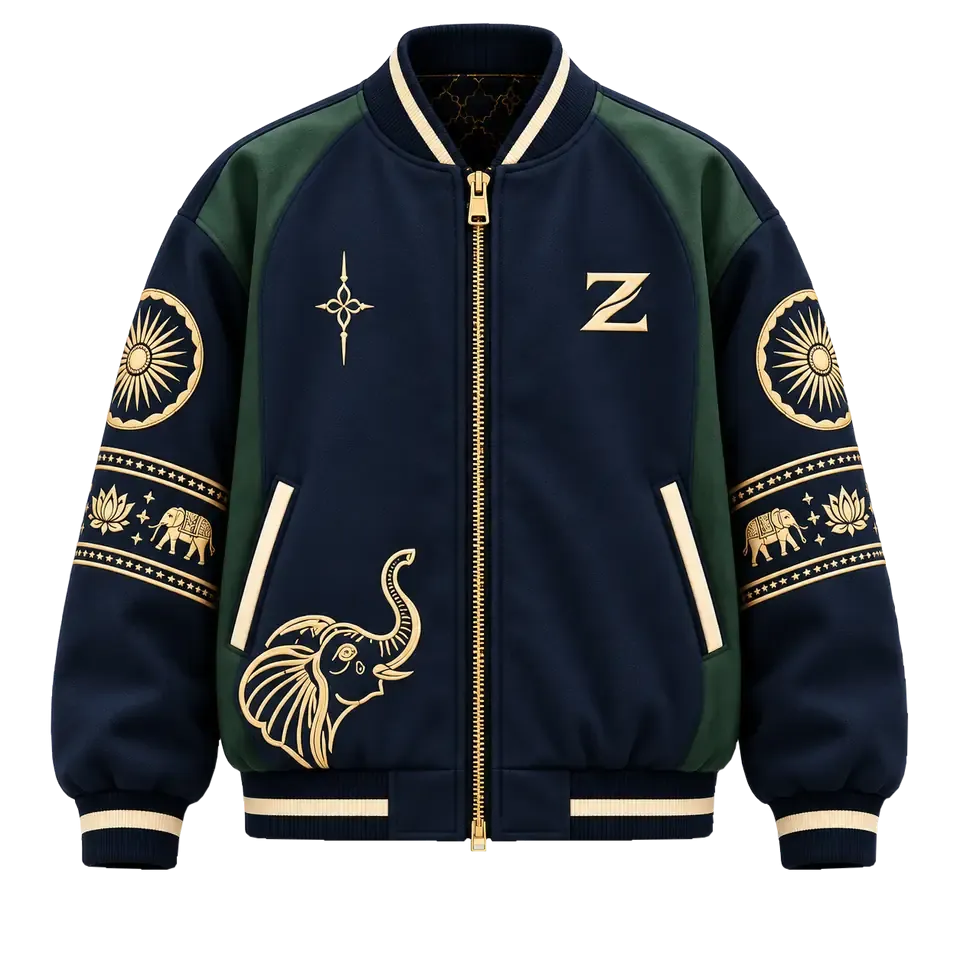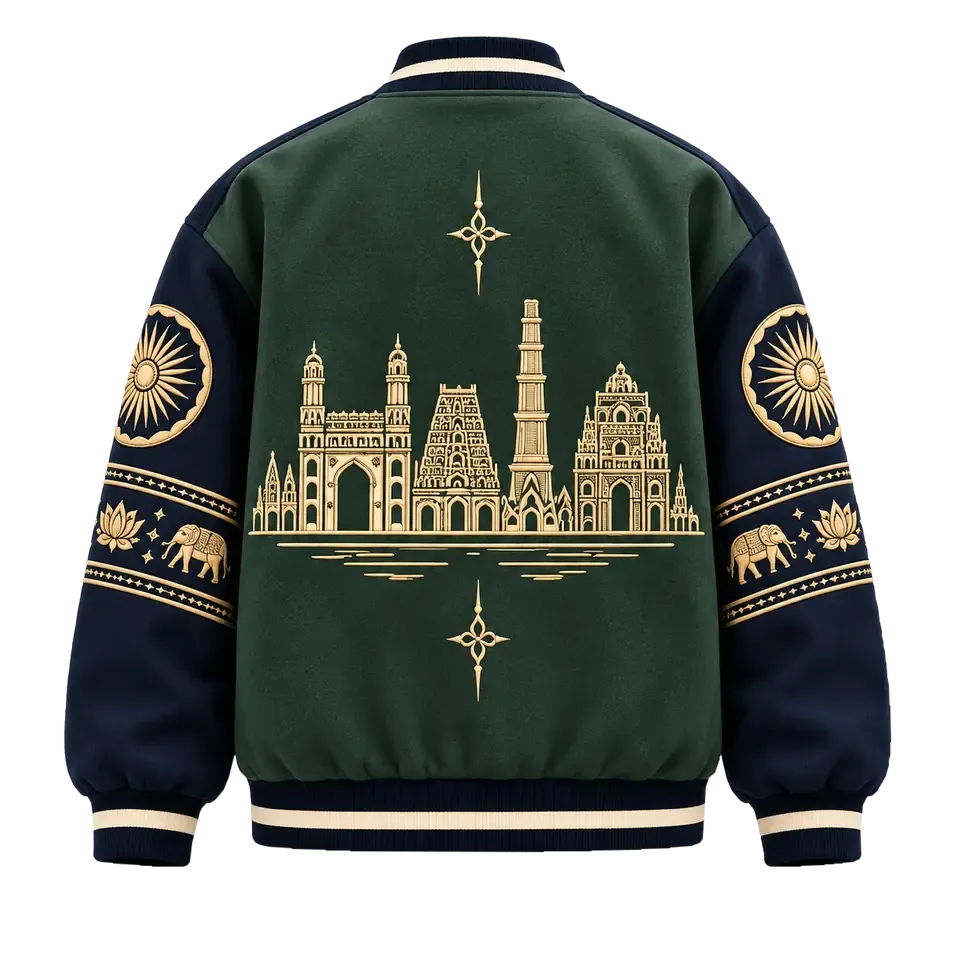

02 — One Culture
A mausoleum on the Yamuna, a statue above Guanabara Bay, a stepped pyramid in the Yucatán. They were built by different people, for different reasons, in different centuries.
One Culture sets them side by side on a single horizon — not to blend them into one identity, but to show that difference can share the same ground. Every landmark is credited on the garment's page.
02 — One Culture
One Culture
A black work jacket that sets landmarks from three continents on a single horizon.
Chest detail
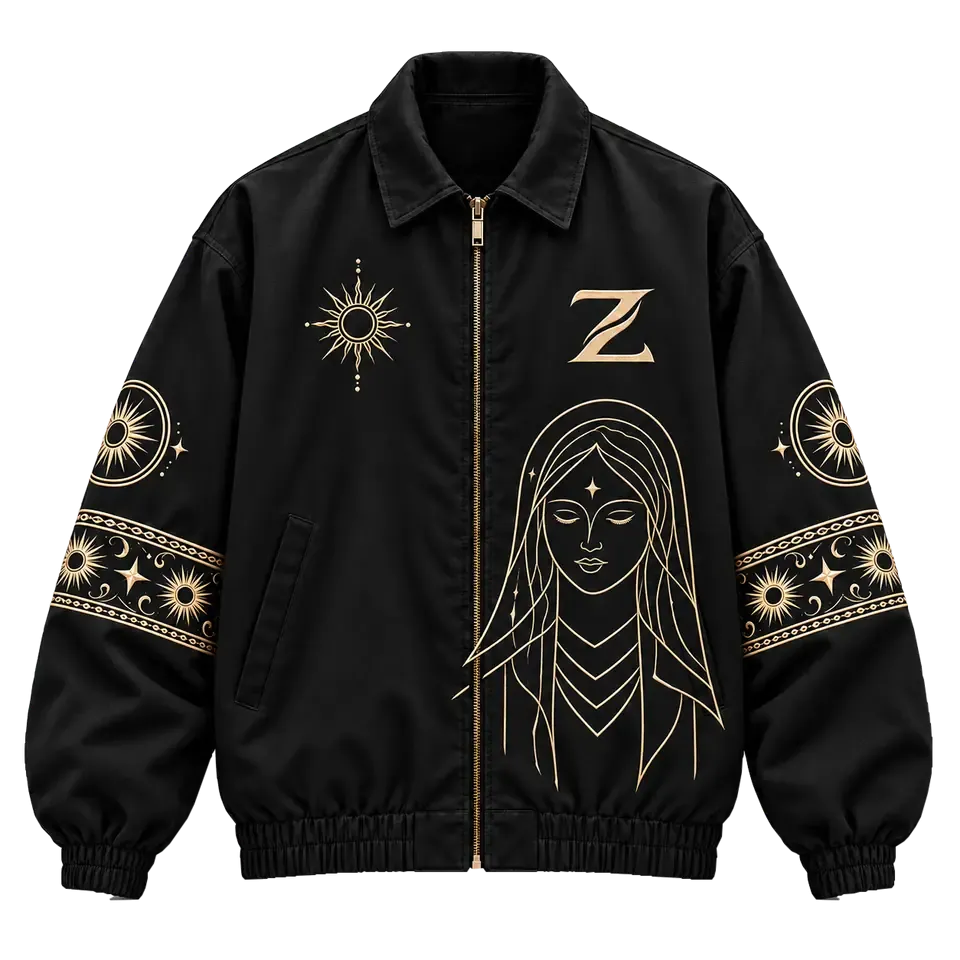
Portrait. Sun. Monogram.
A line-drawn portrait, a radiant sun and the house Z — tonal gold thread on black, drawn without lifting the line.
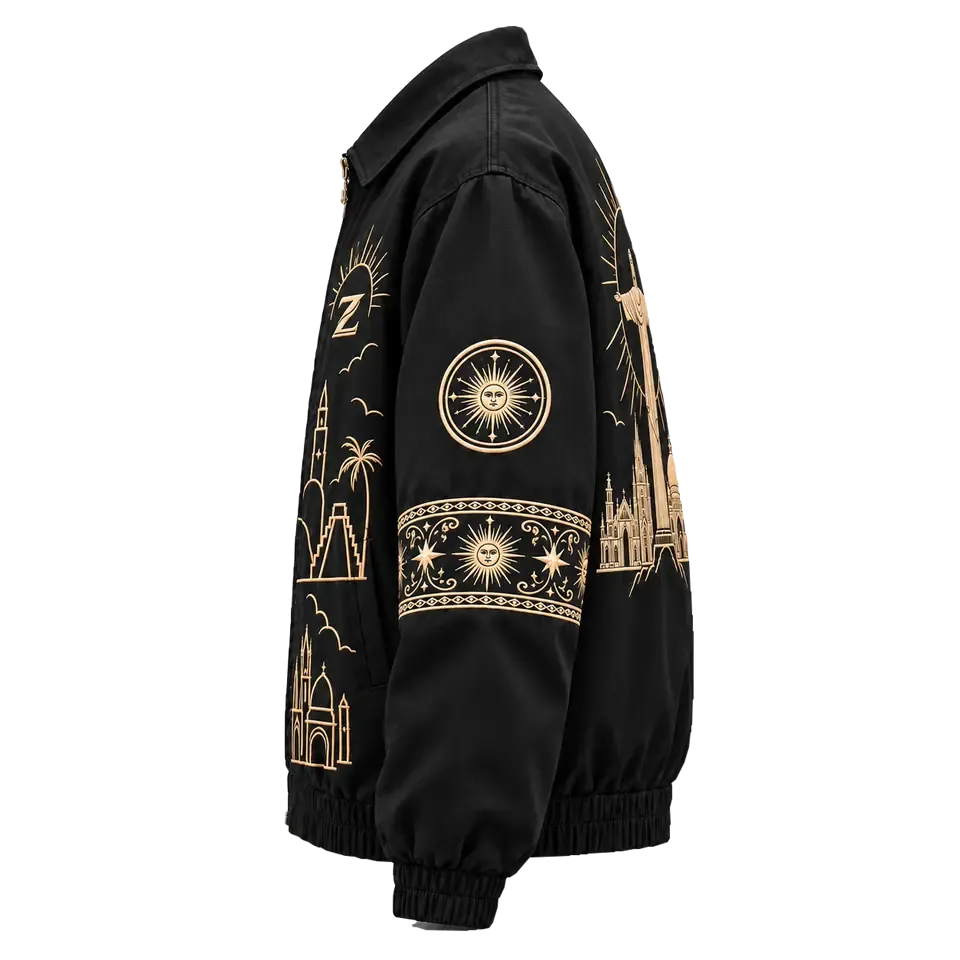
Sleeve embroidery
Details that travel.
Sun medallions above a band of stars and scrollwork, repeated on both arms.
The back
Different roots. Same ground.
The Taj Mahal, Christ the Redeemer and a Maya stepped pyramid under one sun — each named, none owned.
One Culture Jacket
One jacket. Many worlds.
Tonal gold on black. Made in limited numbers.
02 — One Culture
One Culture Jacket
₹3,000
Inspired byInclusive of all taxes. Delivery across India from ₹100.
A black work jacket that sets landmarks from three continents on a single horizon, embroidered in tonal gold line-work.
- Black body with point collar
- Single-line embroidery in gold-tone thread
- Elasticated cuffs and hem
- Gold-tone full-length zip, front welt pockets
- Limited production
Select size
Choose a size to continue.
Relaxed, dropped-shoulder fit with a blouson hem. Take your usual size for an easy drape; size down for a closer fit.
Source & credit
The Taj Mahal, Christ the Redeemer and Maya stepped-pyramid architecture
The Taj Mahal was built in the 17th century under the Mughal emperor Shah Jahan as a mausoleum on the Yamuna. Christ the Redeemer, completed in 1931, was designed by Heitor da Silva Costa with sculpture by Paul Landowski — an icon of 1930s Art Deco engineering. Stepped pyramids such as El Castillo at Chichén Itzá were raised by the Maya centuries earlier. Each belongs to its own place and its own people.
Credited to: The builders, artisans and communities behind each landmark
Meet the storyNext chapter — 01
India